
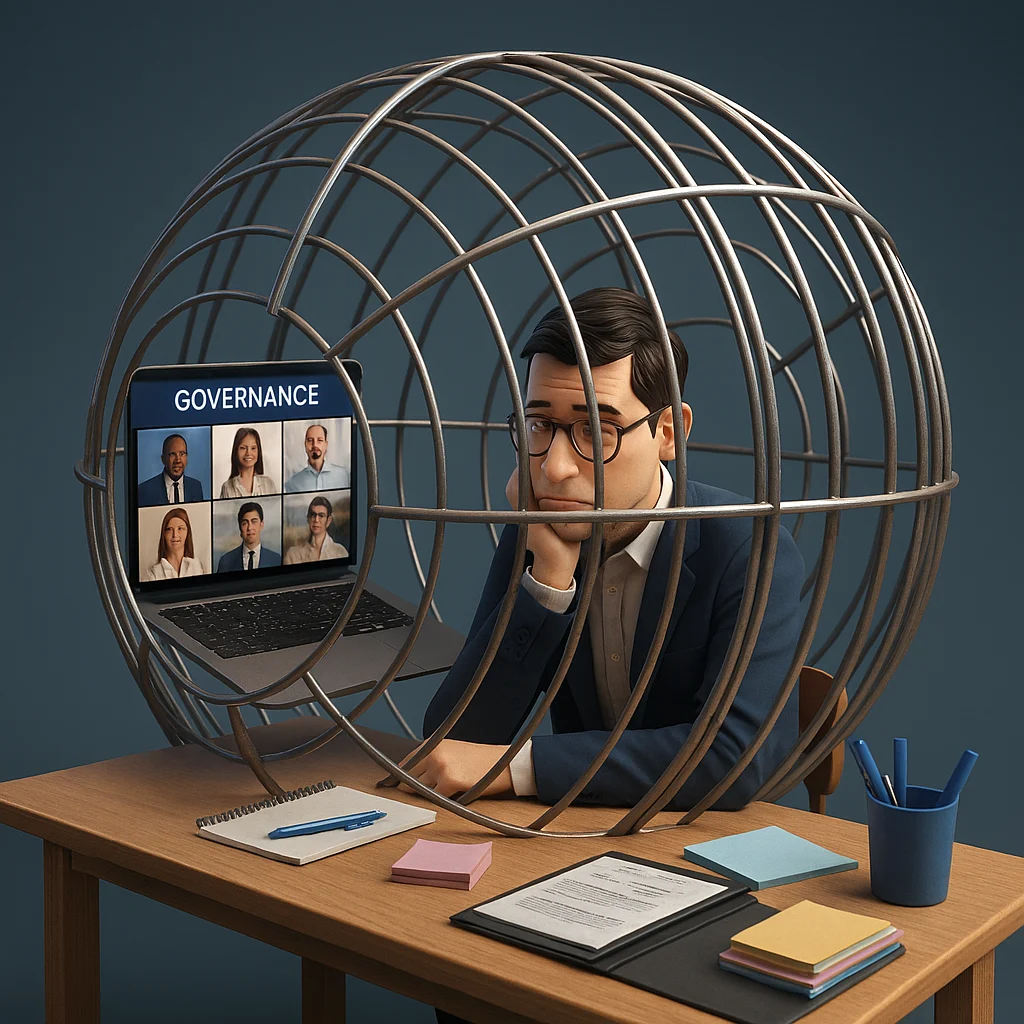
Let’s be honest. When someone says “we need better data governance,” what they usually mean is “we need more meetings.”
Somewhere along the way, governing data turned into a career path for people who love spreadsheets about spreadsheets. Committees meet to debate ownership of a definition while the business quietly moves on without them.
The problem isn’t the people. It’s the design. Governance was built like a compliance function, not a performance system. It’s obsessed with control and allergic to speed. Every time the business accelerates, governance introduces another checkpoint to slow it down.
And here’s the irony. The more you “govern,” the less anyone uses the system. Nobody wants to fill out a form or define a glossary term before they can answer a question.
That’s why most governance programs die quietly, not from lack of funding, but from lack of relevance. They measure definitions instead of decisions. They track approvals instead of outcomes. It’s like managing traffic by counting the cars parked in the garage.
If you want governance that works, flip the model. Stop treating data as a static asset. Start managing it as a living system. Watch what’s actually being queried, built, and reused. Learn from that behavior.
That’s where the shift happens. Governance shifts from being about control to being about consequence. You stop dictating how people should use data and start seeing how they really do.
The best governance is invisible.
It doesn’t slow down the work. It improves it.
It doesn’t need a steering committee. It requires curiosity and accountability.
When you can measure impact, you don’t need another rule.
You just need the courage to let go of the things that don’t matter.