
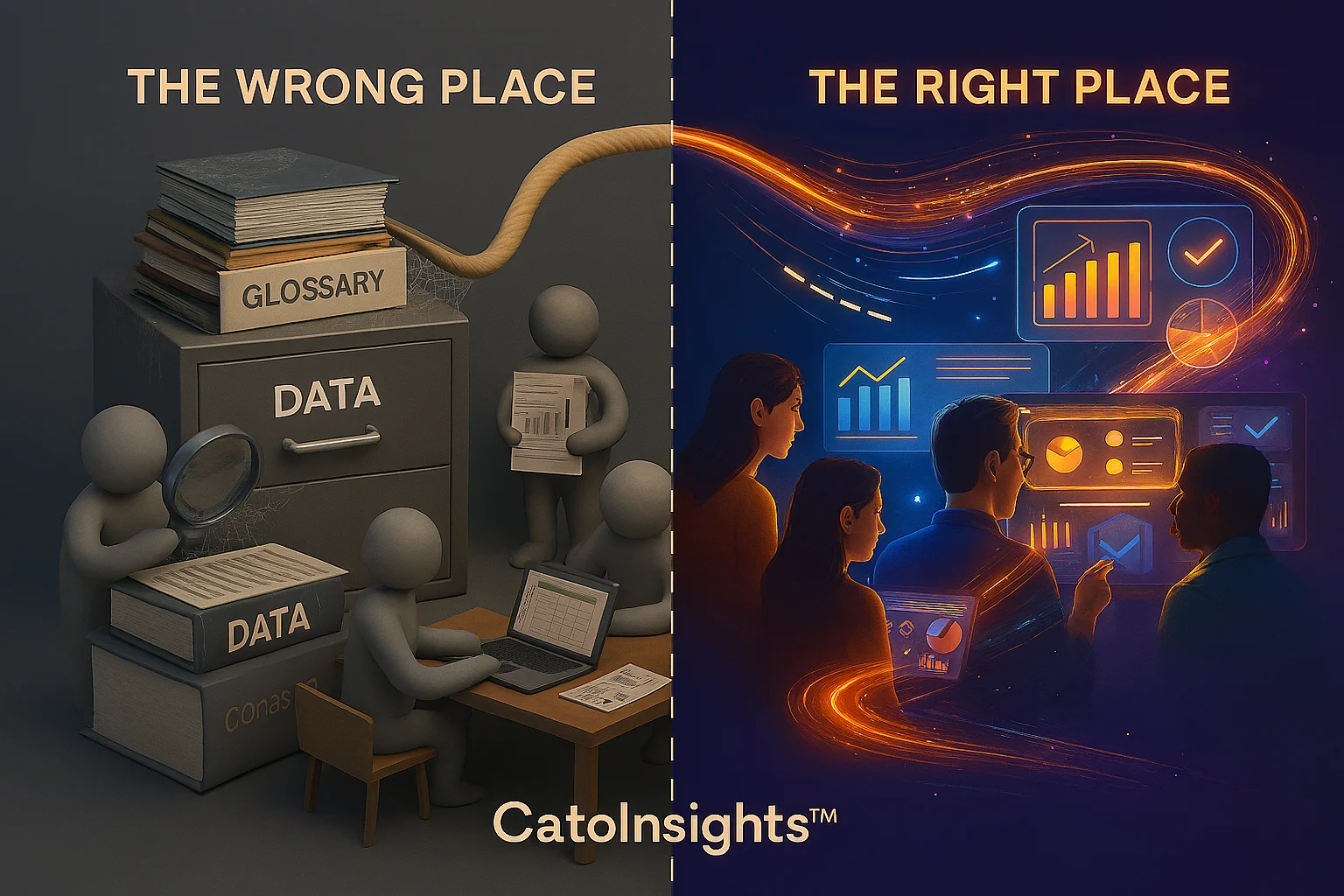
Executives are starting to say it out loud. Data governance doesn’t work.
It’s expensive, slow, and doesn’t change how decisions are made.
The story is always the same. A governance program launches. A committee forms. A tool gets bought. Thousands of terms are defined.
And still, the business moves on without it.
Teams create their own data, analysts define their own metrics, and the “governed” data sits unused in a catalog no one opens.
The intent was right. The execution came from another era.
Governance was built for control, not impact. It measures documentation instead of decisions. It asks people to govern data they barely have time to use.
But data doesn’t sit still. It behaves. It moves, transforms, gets queried, reused, and reinvented.
So why do we keep managing it like a policy on a shelf?
The next era isn’t about defining rules. It’s about learning from behavior.
Seeing what data is actually used. How it performs. What it breaks. What it drives.
When you govern through usage, you stop managing what people say data means and start understanding what it does.
That’s where insight accountability begins.
This isn’t about control. It’s about consequence.
You see which metrics drive outcomes, which dashboards fade, which transformations slow performance, and which data models create value.
When leaders connect data behavior to business results, governance stops being a cost center and becomes a performance system.
That shift is already underway inside the few organizations willing to admit the old way failed.
And when they talk about what’s next, they don’t call it governance anymore.
They call it what it should have been all along — insight accountability.